How to spot equipment lay-down before a plant extension breaks ground
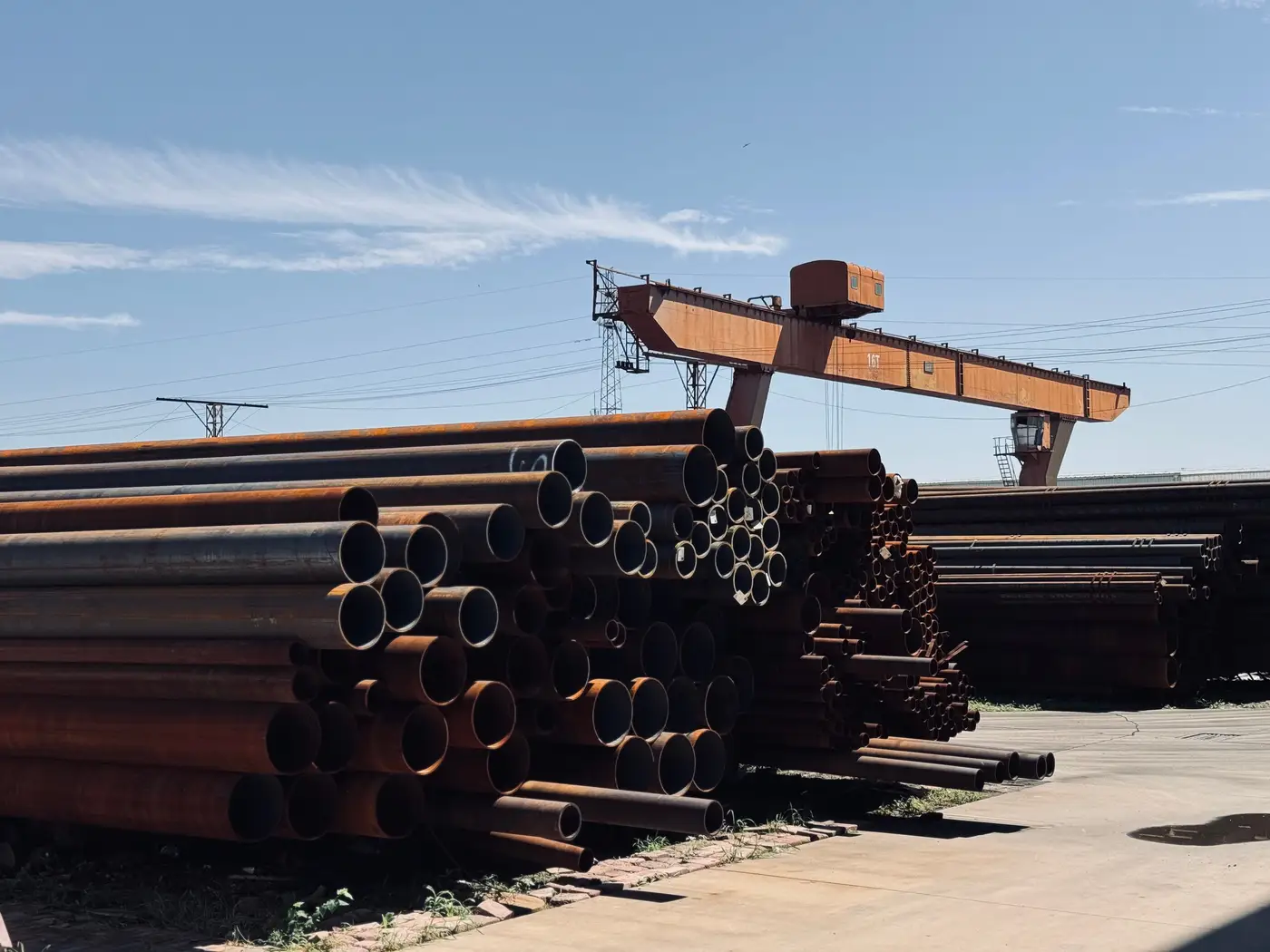
By the time a company confirms a plant extension on an earnings call, the site has usually been moving for a quarter or more. Contractors don't mobilize the week permits clear. They stage first, and staging leaves a footprint you can see before a shovel ever touches dirt.
What the yard looks like before anything gets built
A lay-down yard is the holding area a general contractor sets up next to a site before vertical construction starts. It's where material sits until the crews are ready for it, and it tends to follow a pattern you can learn to recognize.
Look for a graded, compacted pad that wasn't there last quarter, often gravel or crushed stone rather than finished paving, since it only needs to carry equipment weight for a few months. Chain-link or privacy fencing goes up around the perimeter before anything valuable arrives on site, which itself is a tell if a parcel that's been open field suddenly gets fenced. Once the pad's ready, you start seeing the actual inventory: bundled rebar stacked in rows, pre-cast concrete panels laid flat waiting for a crane, stacked conduit and piping, sometimes modular steel sections if the build involves a pre-engineered structure. Flatbed trailers parked in rows rather than moving is a good sign material has been dropped and is sitting, not passing through.
Portable office trailers show up around the same time, usually near the yard entrance, along with porta-johns lined up for a crew that hasn't started yet but is clearly expected. Silt fencing and erosion-control berms appear around the staging area too, since most jurisdictions require stormwater controls in place before significant ground disturbance, which means they often predate the disturbance itself by weeks.
None of these on their own proves an expansion is coming. A fenced gravel pad could be for routine maintenance equipment. But the combination, new grading plus perimeter fencing plus material stacked in a pattern that matches a building footprint rather than random storage, is a specific enough signature that it's worth tracking site by site rather than waiting for a quarterly update.
The sequence, and why it runs ahead of the announcement
Staging isn't random. It follows a rough order that repeats across sites regardless of industry: site clearing and grading first, then lay-down yard setup and fencing, then material deliveries building up over several weeks, then excavation and foundation work, then the structural steel or tilt-up panels actually go vertical. Each step is visible from above before the previous one is even finished elsewhere on the property.
That sequencing matters because capex guidance and groundbreak press releases tend to land after the company has already committed real money, not before. A plant extension that gets confirmed in a Q3 earnings call was likely staged in Q1 or Q2. If you're only checking in when news hits, you're reading about the decision after the decision already happened and after competitors had a quarter's head start to notice and respond.
This is the gap a lot of analysts and suppliers end up trying to close with site visits or relying on local contacts near specific plants, which works but doesn't scale past a handful of facilities and depends on someone happening to drive by at the right time. Tracking a defined list of named sites on a quarterly cadence catches the lay-down phase on its own schedule instead of waiting for a tip or a press cycle, which is the whole point of watching for staging rather than waiting for the ribbon-cutting photo.
A few things that look like staging but aren't
Worth ruling out before you flag a site: routine equipment storage yards that a plant already operates year-round, temporary laydown for a maintenance turnaround or shutdown (shorter duration, usually inside the existing fence line rather than on adjacent land), and solar or utility construction staging near an industrial parcel that has nothing to do with the plant itself. The giveaway for a real plant extension is new grading on previously undeveloped or underused acreage adjacent to the existing facility, combined with material quantities that match a building addition rather than a few weeks of upkeep.
If you track capacity expansion by watching for this sequence site by site, Capacity Expansion Tracking turns it into a quarterly change note instead of a guessing game.